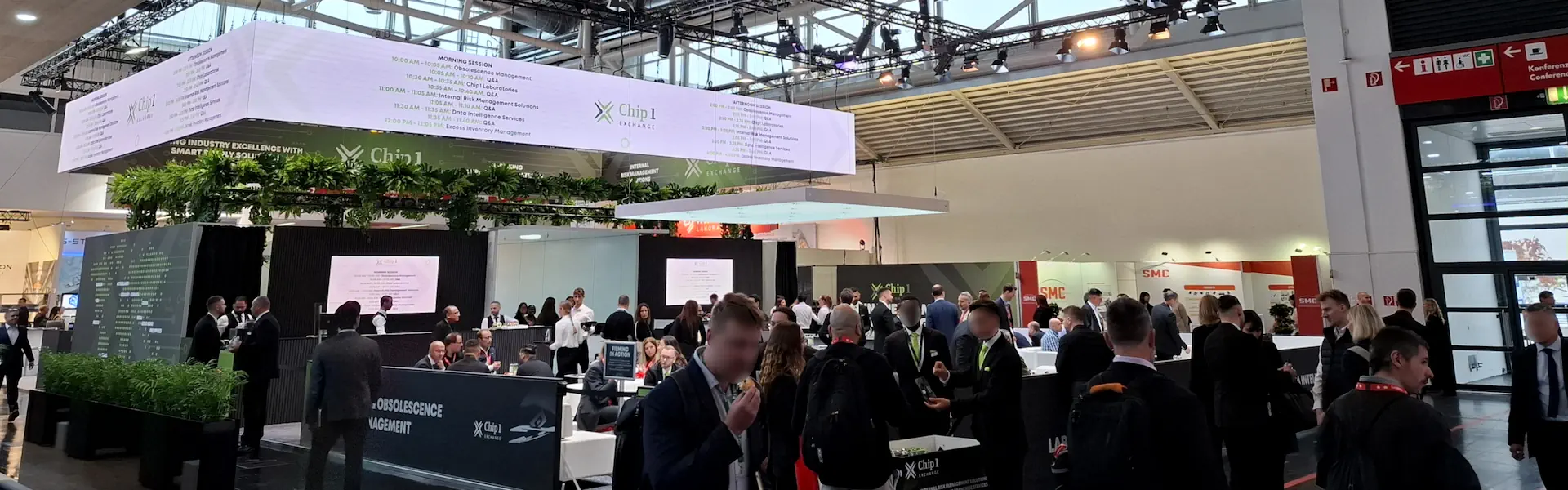
The Perfect Pixel Pitch for Your Trade Show Booth
If you want to stand out from the crowd at a trade show today, modern LED walls are practically a must. They attract attention, convey messages dynamically, and give every trade show booth a highly professional image. But during the planning phase, you’ll quickly come across a technical term that’s crucial for image quality and your budget: pixel pitch. Choosing the right pixel pitch determines whether your content looks razor-sharp or appears pixelated and unprofessional.
What is pixel pitch, and why is it important?
The term “pixel pitch” (often referred to as pixel spacing) describes the physical distance between the centers of two adjacent light-emitting diodes (LEDs) on an LED wall. This value is typically specified in millimeters; for example, a pixel pitch of 2.5 (often denoted as P2.5) means that the individual LEDs are exactly 2.5 millimeters apart. The smaller this value is, the more pixels there are in the same area, which directly results in a higher resolution.
Why is this value so critical for your trade show presence? It’s simple: It determines the distance at which the human eye no longer perceives individual pixels as separate dots, but rather as a uniform, sharp overall image. If the pixel pitch is too large for the chosen location, the image will appear “grainy” or pixelated to trade show visitors. This can subconsciously undermine your brand’s professionalism and severely impair the readability of text.
In addition, the pixel pitch directly affects the brightness, power consumption, and—above all—the cost of the LED wall. Since smaller pixel pitches require a significantly higher number of LEDs per square meter, production and rental costs also increase. It is therefore important to find the perfect balance between visual brilliance and economic efficiency to get the most out of your trade show budget.
The Optimal Viewing Distance for Your Trade Show Booth
The most important rule of thumb for choosing the right pixel pitch is based on the average viewing distance of trade show visitors from your LED wall. A well-established rule of thumb in the events industry is that for every millimeter of pixel pitch, a minimum viewing distance of about one meter is required. With a pixel pitch of 2.0 mm, the optimal viewing distance is therefore around two meters, at which point the image is perceived as absolutely sharp and flawless.
At a typical trade show booth, however, this viewing distance varies greatly depending on the positioning of the LED wall. If the wall is placed directly along the aisle, where visitors walk right past it and may even stop to take a closer look, a very short viewing distance of just one to two meters is the norm. If, on the other hand, the LED wall is suspended high above the booth as a highlight visible from a distance (as a so-called rigging banner), the viewing distance is often five meters or more.
In practice, this means: Carefully analyze the visitor flow paths and the layout of your booth in advance. A pitch that’s too small for a wall hung high up is a waste of money, since the eye can’t perceive the difference from a distance. Conversely, a pitch that’s too large for a wall at eye level in the immediate conversation area completely ruins the visual experience, since visitors are literally standing “in front of a wall of dots.”
How to Find the Right Pixel Pitch for Your Trade Show
To determine the optimal pixel pitch for your project, the first step is to analyze the type of content you want to present. If you want to display high-resolution product videos, intricate 3D animations, or detailed text panels and tables, a high pixel density (a small pitch ranging from 1.5 mm to 2.5 mm) is essential. If, on the other hand, your focus is primarily on atmospheric backlighting, large-scale color gradients, or simple logos, a pitch of 3.9 mm or more is often entirely sufficient.
For the vast majority of traditional indoor trade show booths, a standard between P1.9 and P2.6 has now become established. For typical booth sizes ranging from 20 to 100 square meters, these sizes offer the perfect balance between excellent image quality at close range and affordable rental rates. They allow visitors to approach the screen from a distance of just under two meters without the image losing any of its appeal—which is particularly important during presentations and sales pitches.
Don’t forget to consider how it interacts with other design elements of your booth. For example, if you’re planning an interactive LED wall that’s operated by touch, users will interact with the screen from an arm’s length away (approx. 50–80 cm). In such specific cases, an extremely fine pixel pitch of less than 1.5 mm is even recommended to ensure a tablet-like, crystal-clear user experience.
Keeping Costs in Mind: When Is a Smaller Pixel Pitch Worth It?
The decision to use a smaller pixel pitch is always a budget decision as well, since costs rise almost exponentially as the pixel pitch decreases. An LED wall with a pitch of 1.5 mm requires more than four times as many LEDs per square meter compared to a wall with a pitch of 3.0 mm. This enormous additional technical effort is, of course, directly reflected in the rental price, the shipping weight, and the power consumption at the trade show.
A very small pitch is therefore particularly worthwhile if your trade show booth is designed to convey absolute premium quality and attention to detail—as is the case, for example, in the automotive industry, among watch manufacturers, or in the high-tech sector. In these cases, every visible pixel can damage the brand image. If your visitors are also actively interacting with the content or viewing presentations up close, the investment in a crystal-clear display is absolutely justified and pays off in the form of longer dwell times.
However, you can save money by using a smart combination: For areas with direct customer contact (e.g., the back wall of the consultation area), use a high-resolution LED system with a small pitch. For ceiling-mounted displays located far away or to create a visual impact from a distance, a significantly more affordable system with a larger pixel pitch is perfectly sufficient. With this targeted hybrid solution, you can maximize the visual impact of your trade show booth without unnecessarily straining your budget.
Conclusion: The Perfect LED Wall for Your Success
Choosing the perfect pixel pitch isn’t a matter of “the smaller, the better,” but rather of “as fine as necessary and as cost-effective as possible.” The key to success lies in a thorough analysis of your booth design, the planned content, and, above all, the actual viewing distance of trade show visitors. Only by harmoniously balancing these factors can you create an impressive visual experience that leaves a lasting impression.
For most exhibitors, a pixel pitch in the range of 2.0 to 2.5 mm proves to be the ideal “sweet spot” for modern indoor trade show design. It perfectly captures the attention of passing visitors, displays even small text clearly, and remains within a cost-effective range. Larger pixel pitches are ideal for creating a strong visual impact from a distance, while extremely small pixel pitches under 1.5 mm should be reserved for premium and interactive applications.
That’s why it’s best to plan your next trade show appearance from the very beginning with an experienced media technology partner. Through professional consultation and a 3D visualization of the booth, you can precisely determine the optimal pixel pitch. This ensures that your message not only gets across at the trade show but also leaves a lasting impression on your target audience with brilliant images and maximum impact.
With the right understanding of pixel pitch, nothing stands in the way of a spectacular trade show appearance. Use this knowledge to make the most of your budget and present your brand in the best possible light—for a visual experience that magically draws in visitors.
