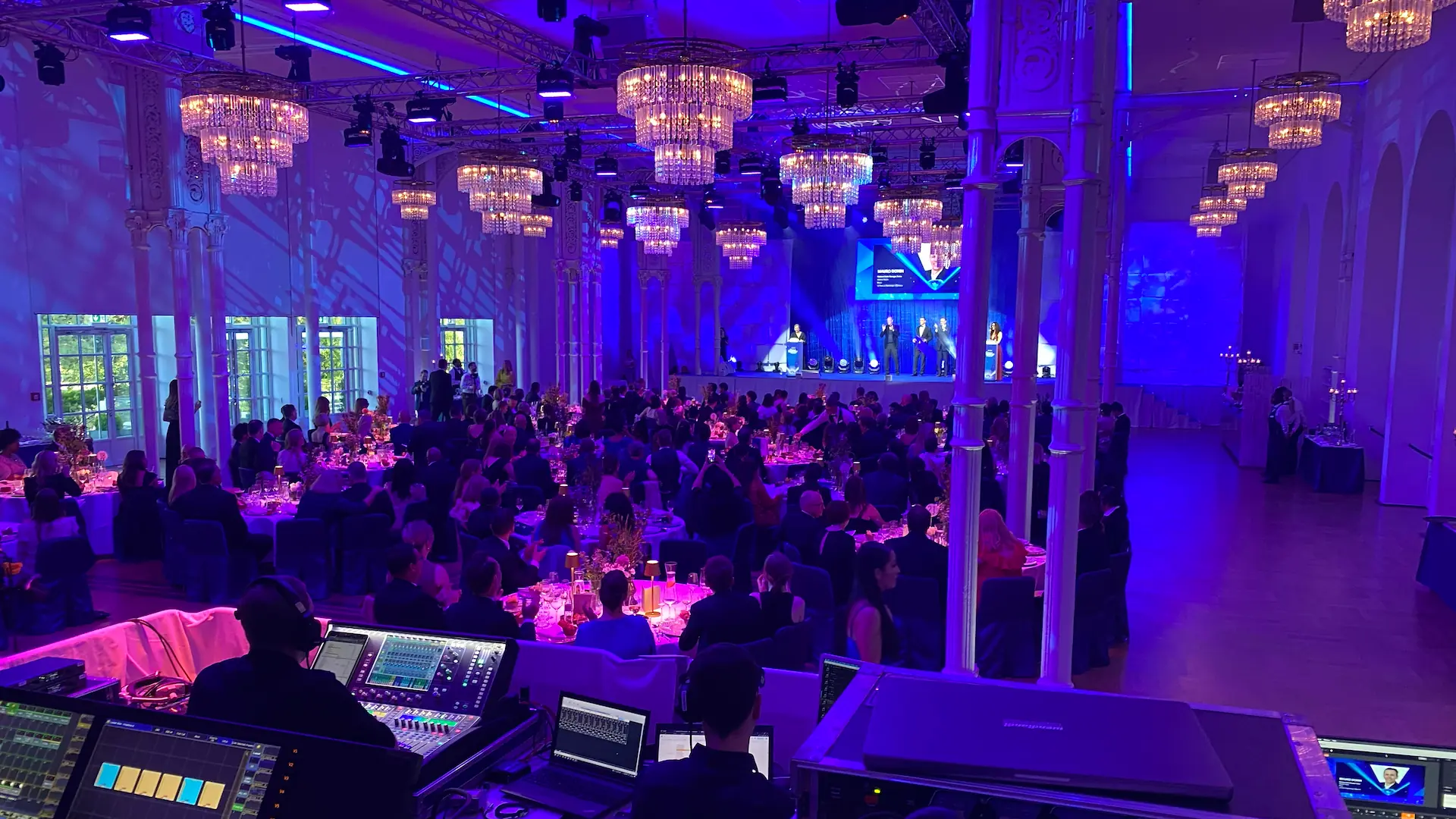
How to Plan Successful Corporate Events: The Ultimate Guide
The world of corporate events is moving faster than ever. Anyone organizing a company anniversary, a groundbreaking conference, or a glamorous gala today knows this: The success of the event hinges entirely on its technical execution. If the microphone feedback during the CEO’s pitch or the presentation on the screen fading in bright daylight, even the most exquisite catering won’t be enough to make up for the damage to the company’s reputation. That’s exactly why decision-makers, event managers, and agencies must Planning Event Technology for 2025 Successfully. It’s no longer just about a few hastily set-up spotlights and creaking speakers; it’s about immersive experiences, seamless hybrid integration, and absolute reliability at an engineering level. This guide takes you on a technically fascinating journey behind the scenes and shows you how, with the right hardware knowledge and a dash of passion, you can turn your next B2B event into a true masterpiece.
Event Technology 2025: Perfect Sound for B2B Events
Acoustic perception is the unsung hero of every successful event. If we are to successfully plan event technology for 2025, we must make a clear distinction between pure speech intelligibility and dynamic music reinforcement. For a keynote speech or panel discussion, crystal-clear, present sound in the frequency range of the human voice is essential. This is where discreet yet highly precise column speakers shine, as they direct sound toward the audience at ear level without unnecessarily exciting the ceiling. However, if the event transitions seamlessly into a gala with a live band, we need the physical power and wide dispersion of line-array systems. To avoid unpleasant echo effects and muddy sound in the back rows in deep rooms, experienced sound engineers integrate so-called delay lines—time-delayed support speakers that deliver the audio signal in exact sync with the direct sound from the main stage.
Equally critical is the choice of microphone, as it serves as the direct interface between the speaker and the audio equipment. While a dynamic CEO might prefer the freedom of movement offered by a discreet, skin-colored headset microphone, guest speakers often feel more comfortable with a classic wireless handheld microphone or a permanently installed gooseneck microphone on the lectern. The key here lies in the choice of capsule and polar pattern: A supercardioid pattern elegantly filters out distracting ambient noise on stage and minimizes the risk of feedback. It is this attention to electroacoustic detail that ultimately determines whether a message merely reaches the audience—or whether it truly resonates with them.
But even the best hardware is of little use without an invisible yet crucial foundation: on-site frequency management. In an age when the digital spectrum is increasingly congested by LTE, 5G, and countless Wi-Fi networks, operating dozens of radio links is like playing a complex game of chess. Professional event technicians meticulously scan the venue’s RF (radio frequency) environment in advance and assign intermodulation-free frequencies to every handheld transmitter, headset, and in-ear monitoring system. This digital precision work guarantees that the audio will still be transmitted absolutely interference-free and in studio quality, even if a thousand guests pull out their smartphones at the same time.
Video Technology & LEDs: 3 Pro Tips for Visual Highlights
Visual brilliance is the hallmark of modern B2B events, and technological advancements in this area have made breathtaking strides in recent years. The age-old debate between traditional projection and self-illuminating LED walls is now usually decided by the lighting conditions in the room and the desired contrast range. While projectors still excel at producing soft, cinematic images in darkened halls, LED systems are the only viable option for events held in daylight or in brightly lit exhibition halls. The decisive factor here is the pixel pitch. For a conference where the audience is seated close to the stage, a fine pixel pitch of 1.5 to 2.5 millimeters is essential to ensure that Excel spreadsheets and detailed graphics remain razor-sharp. Feel free to take a look at the wide variety of innovative LED modules and custom-fit solutions to understand just how flexibly these high-end tiles can be assembled today into seamless, gigantic display surfaces.
The true heart of the video technology, however, beats behind the scenes: in the control room. A huge display is only as good as the signal feeding it. High-performance video mixers and media servers handle the complex signal management, scale different resolutions in real time, and enable so-called seamless switching between PowerPoint presentations, promotional videos, and live camera feeds. A black screen during a speaker change is an absolute no-go. By using professional cue systems and preview monitors at the lectern (presenter displays), speakers always maintain control over their slides and the remaining speaking time. For special architectural “wow” effects, visual signals can also be mapped onto custom-designed shapes—a fantastic example of this is the use of impressive LED rotundas that completely redefine the space visually.
Not least, the modern workplace is forcing us to organically integrate hybrid events and streaming concepts into live production. If you want to successfully plan event technology for 2025, online participants must enjoy the same high-quality experience as the guests in the venue. This requires networked camera rigs or discreet, remotely controllable PTZ (pan-tilt-zoom) cameras that capture the action from various angles without getting in the way. Live encoding converts these high-resolution SDI signals into low-latency data streams for platforms such as Teams, Zoom, or dedicated event apps. At the same time, sophisticated audio routing (N-1 switching) is required to ensure that remote speakers can be heard crystal-clear in the venue without having to endure their own echo in their headphones.
Effective Lighting Design: How to Create the Perfect Atmosphere
Light is far more than just the opposite of darkness; it is the most powerful emotional tool at our disposal in event architecture. The foundation of any professional lighting design is the front lighting for the stage and the speakers. This involves far more than just brightness. The color temperature (measured in Kelvin) and the color rendering index (CRI) of the profile spotlights and step lenses must be precisely calibrated to make skin tones appear natural and healthy. At the same time, the light must be shaped and glare-reduced so that it does not blind the speakers, does not shine directly into the audience’s eyes, and provides the camera sensor with enough photons to generate a noise-free, brilliant image for the stream. It is a delicate balancing act between camera physics and human well-being.
Once the basic functional lighting is in place, the magic of ambient lighting begins. Sober concrete walls or sterile exhibition halls can be transformed into warm, inviting spaces through strategic uplighting (floor spotlights that illuminate the walls from below). By using modern RGBAW-UV LED spotlights, the colors of the corporate design can be reproduced in the space with absolute color accuracy. This subtle integration of the brand identity strengthens guests’ sense of belonging without coming across as intrusive. The lighting creates zones, directs the audience’s gaze specifically toward product highlights or catering areas, and thus structures the psychological flow of the entire event.
True mastery is evident in the spatial dynamics and kinetic elements. Static lighting tires the eye over time; dynamic lighting keeps attention high. Through gentle transitions, moving lights that project patterns onto the floor during a walk-in, or subtle adjustments in brightness during a presentation, the space literally breathes in sync with the program’s flow. Those who also want to draw guests’ gaze upward can blend lighting and video technology, as is the case with spectacular ceiling and special installations. Such three-dimensional worlds of light and imagery break away from the traditional stage setup and completely immerse the audience in the brand’s world.
Event Technology 2025: Safety & Power Supply
Behind all the visual and acoustic splendor lies the unsung backbone of every corporate event: rigging, structural engineering, and the electrical infrastructure. Anyone who wants to successfully plan event technology in 2025 must never underestimate the mechanical and electrical fundamentals. Often, several metric tons of truss systems, speakers, spotlights, and LED modules hang above the audience’s heads. The load distribution at the suspension points on the hall ceiling must be calculated by certified structural engineers and installed by experienced riggers with millimeter-level precision using state-of-the-art chain hoists. Physics tolerates no mistakes here, and the bending moments of aluminum trusses are an exact science in their own right.
The electrical infrastructure is just as critical. A modern setup consumes enormous amounts of electrical energy, especially when large LED walls and hundreds of spotlights are turned on simultaneously. Meticulous three-phase power planning, the distribution of phases to avoid unbalanced loads, and the installation of hundreds of meters of thick power cables in trip-free cable bridges are absolutely essential. For business-critical events where a power outage would have catastrophic consequences for the stream or presentation, expert planners design redundant systems with uninterruptible power supplies (UPS) and synchronized emergency generators. This ensures that the projector stays on and the microphone remains active, even if the local power grid temporarily fails.
All of these technical marvels are subject to strict legal standards in Germany, foremost among them DGUV Regulation 17/18 (formerly BGV C1) for event and production venues. These regulations define safety requirements for lifting gear, the dual securing (safety measures) of suspended loads, and the regular inspection of electrical systems (DGUV V3). A reputable technical partner not only provides the latest equipment but also the corresponding inspection logs, risk assessments, and certified event technology specialists who assume legal responsibility on-site for safe operation. Safety is not a budget item that can be cut—it is the non-negotiable foundation for carefree celebrations and conferences.
Practical Checklist: How to Successfully Plan Event Technology
The journey from the initial idea to the applause at the end of the event is an organizational marathon. If you want to successfully plan event technology for 2025, it all starts with an early and thorough site inspection. Long before the first cable diagram is drawn up, the venue’s logistical bottlenecks must be identified: Are there elevators large enough for flight cases? Is the ceiling load capacity sufficient for the desired rigging? Where are the high-voltage power connections, and what are the room’s natural acoustics like? Only by precisely understanding the physical limitations and possibilities of the space can you design a technical concept that will function smoothly during setup and avoid costly surprises on production day.
The second step involves the coordinated collaboration of the various disciplines. Audio, video, and lighting must not be planned in isolated silos but must be understood as an integrated ecosystem. This means, for example, that the lighting designer must know exactly where the video technician is placing the screens to avoid stray light. The sound engineer must know the location of the loud fans from media servers so as not to place them right next to the sensitive speaker microphones. A detailed CAD (Computer-Aided Design) drawing, in which all trusses, cable routes, and the audience’s lines of sight are simulated in three dimensions, is now the standard tool for elegantly resolving these interdisciplinary interfaces.
The final—and often most underestimated—component of planning is time. A technically demanding event requires sufficient buffer time for setup, lighting checks, sound checks, and, above all, rehearsals. If the CEO can rehearse his presentation on stage in advance using the final clicker and the actual preview monitor, everyone’s stress levels drop dramatically. These rehearsal times are also essential for testing complex media plays—such as the seamless coordination of dynamic LED banners with media server feeds, where video content must be synchronized to the musical beats down to the second. Cutting corners here is definitely a mistake.
A Guide for Decision-Makers: Your Path to a Successful Event
As a CEO, marketing director, or HR manager, you view an event primarily through a strategic lens: it’s about return on investment (ROI), brand loyalty, and emotional messaging. Yet all of these goals are inextricably linked to the technology behind the scenes. It’s a fallacy to believe that event technology is merely a necessary expense. Rather, it’s the emotional amplifier of your corporate identity. Crystal-clear sound and a brilliant image subconsciously signal the highest level of professionalism, innovation, and appreciation to your guests and customers. A technical failure, on the other hand, erodes trust faster than even the best PR department can repair it.
Choosing the right technology partner is therefore a strategic decision that goes far beyond simply comparing the prices on material lists. Look for full-service providers who don’t just move boxes around, but combine engineering expertise with creative vision. An excellent partner will critically scrutinize your briefing, explain complex concepts such as pixel pitches or network topologies in plain language, and develop customized solutions that are precisely tailored to your budget and target audience. Transparency in pricing, dedicated points of contact (project managers), and proven expertise in the form of references from the B2B sector are the key factors you should look for when awarding a contract.
Looking ahead, complexity will continue to increase. Artificial intelligence in signal processing, more sustainable and energy-efficient generations of hardware, and the seamless convergence of physical and virtual spaces (metaverse approaches) will shape the industry in the coming years. Decision-makers who adapt to this transformation and successfully plan their event technology for 2025 will gain a massive competitive advantage. They will not only create simple meetings or conferences, but also distinctive platforms for human and business interaction that reflect the spirit of the times and leave a lasting positive impression.
A corporate event is always a promise to your guests, partners, and employees—a promise of professionalism, visionary leadership, and genuine appreciation. If you Planning Event Technology for 2025 Successfully, transform cold exhibition halls or austere conference rooms into vibrant, emotional worlds of experience that leave a lasting impression. With the perfect blend of acoustic precision, visual brilliance on state-of-the-art LED screens, atmospheric lighting, and uncompromising mechanical safety, you lay the foundation for B2B communication that truly resonates. Rely on in-depth engineering expertise, bold creative concepts, and technology partners who passionately bring your business vision to life. This way, your next event will be far more than just a date on the calendar—it will become a true, dazzling industry highlight.